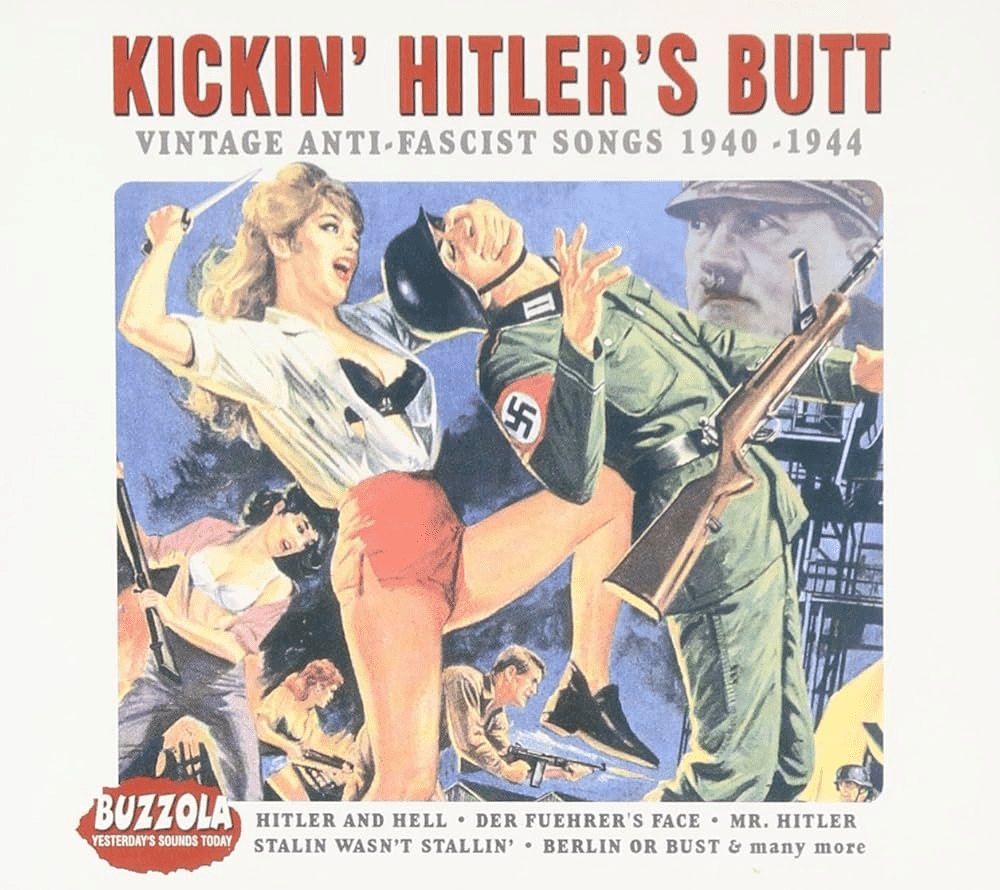
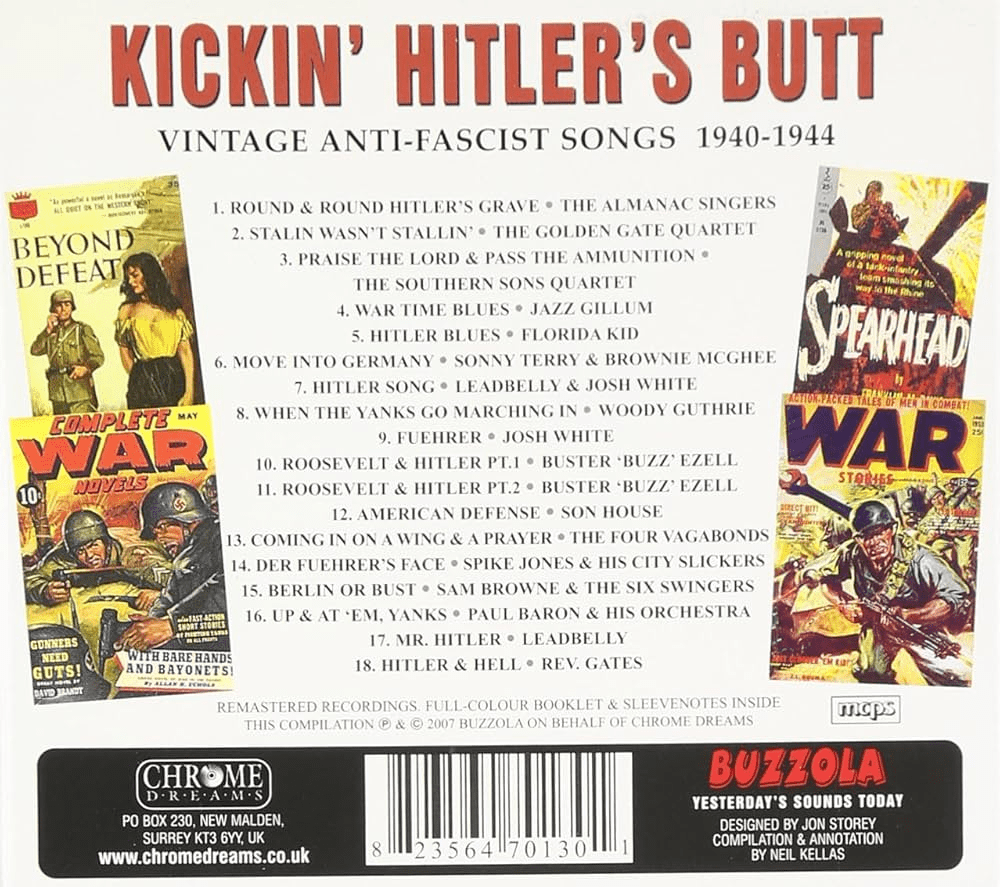
“Kickin’ Hitler’s Butt: Vintage Anti-Fascist Songs 1940-1944” – An Annotated Playlist (Track 12)
Welcome Back!
Today we’re discussing ‘American Defense’ by Son House, a rare political song in 3/4 time from the Delta Blues legend. House is one of the most soul-stirring Blues singers ever recorded. Will this track become a new favorite beside all-timers like ‘John the Revelator’ and ‘Death Letter Blues’? Read on to find out!
If you’re joining us for the first time, welcome! While in one way each discussion will build on the last, ultimately I’ve organized the series in a way that allows each post to stand on its own. If you have yet to listen this excellent compilation, this link will take you to my recreation of it in the form of a YouTube playlist. If you happened to give my channel a follow while you’re there, I’d be much obliged : )
If you’d prefer to start at the beginning of this series, here’s a link to the Introduction.
The Artist
The King of the Delta Blues was born Edward James House Jr. in Mississippi in 1902. Today he is rightfully revered as one of the greats, but national recognition came late to House, partially due to slow record sales during the Great Depression.
It’s worth stating again: Son House is an all-caps BLUES LEGEND. However, unlike contemporaries Lead Belly and Josh White, he’s not known for writing political songs. I was pleasantly surprised to see his name on the track list.
One source places the ‘American Defense’ session with Alan Lomax in Robinsonsville, Mississippi on July 17, 1942, making House forty years old (and some change) at the time of recording. You’d never know it from his voice, though. He had the voice of an ancient spirit, a voice out of time altogether.
The Song
American Defense – Son House
Genre/Style: Blues, Delta Blues, Folk
Year: July 1942
The Music
The track is a pleasant listen, but the bouncy 3/4 plucking of the resonator guitar and sing-songy melody give it a jauntiness that clashes with the tone of the lyrics in some ways. Not to say that all songs about war need to be handled with deadly seriousness (there are plenty of examples on this album that prove otherwise). The melody itself sounds vaguely familiar, and I suspect it was lifted from another tune. Sadly, at this time, I cannot name that tune.
The Lyrics
Click Here for Full Lyrics via Genius
On paper, the lyrics lack focus. There’s a sense of rambling, reading more like an impromptu talking blues on the subject of the war, with House tossing in scraps of things he’s heard in the news.
The Chorus
The song starts with a three-line chorus, which repeats after each verse without variation.
No use in sheddin’ no tears / No use in havin’ no fears / This war may last you for years
Chorus
The overall message here is a little unclear, a murkiness that is present throughout the song.
You might rephrase the three lines to something like “there’s no use crying or being afraid because it’s going to be a long war. Are these meant to be words of encouragement?
The Verses
House touches on a number of subjects over the course of the song’s five verses. In the first two verses, he encourages citizens to support the war effort, asking farmers to “raise more produce,” and the general public to “buy a war savin’ stamps.” In Verse 3, he advocates for kindness in the face of adversity. We run into a little bit of trouble in Verse 4, where House (after shouting out General MacArthur) refers to the people of Japan with a slur (common at the time) and proclaims “the biggest of them all will be dead,” which is both problematic and unsettling. The final lines of Verse 5 echo the somewhat contradictory message of the chorus, “Dear friends and relations / This war’ll end creation / Don’t let this worry you.”
The question remains, why shouldn’t we worry about a war he claims will “end creation”? If this is an effort to uplift his audience, it fails to offer much hope or optimism in place of all that worry.
Reflections
As I much as I love Son House, I struggle with the disconnect between the words and music in this one. And the lyrics, generally, are underwhelming, especially that problematic fourth verse, for all the reasons stated above. I’ll keep my ears tuned to see if I can discover the source of the melody, if it was indeed borrowed from another tune.
Disclaimer
~Content was created without the use of A.I.~
~Media content may be subject to copyright~
~Original content © Adam Astra 2026~