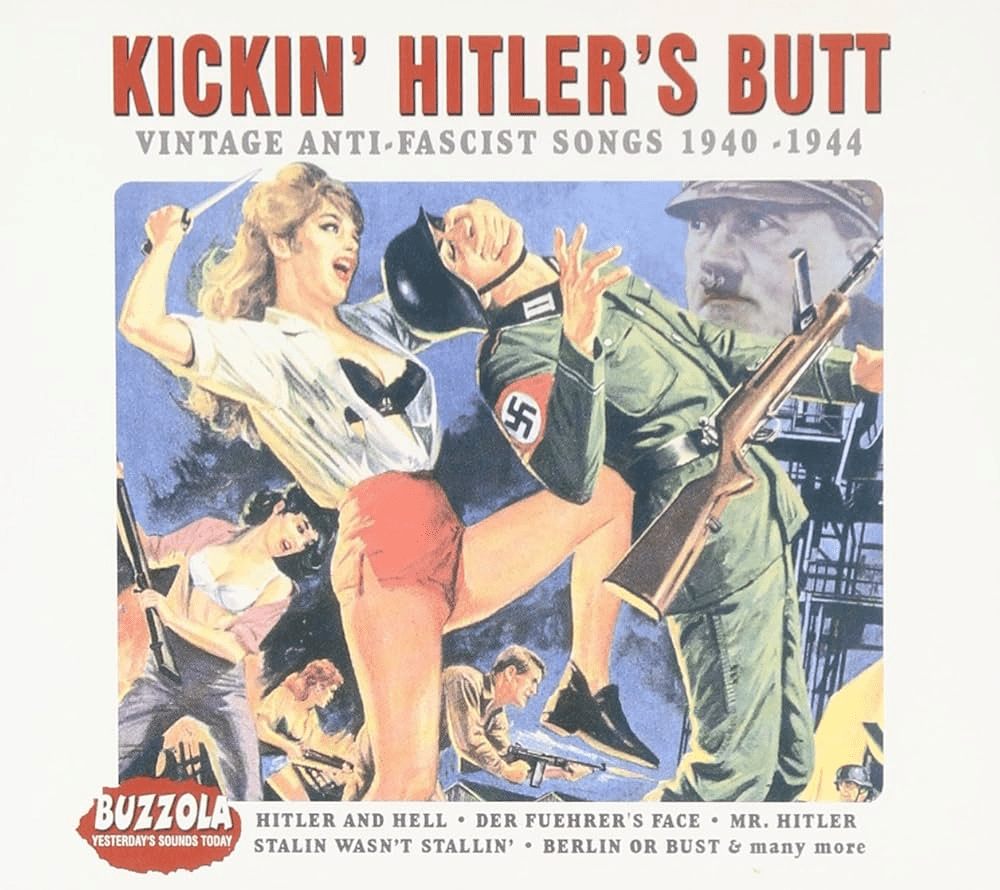
“Kickin’ Hitler’s Butt: Vintage Anti-Fascist Songs 1940-1944” – An Annotated Playlist (Tracks 10 & 11)
Welcome Back!
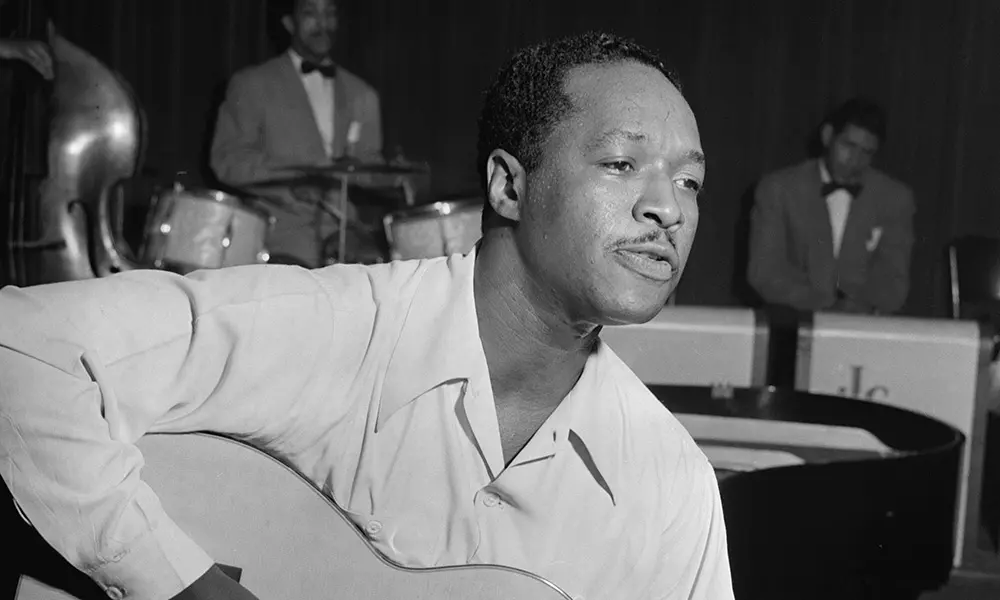
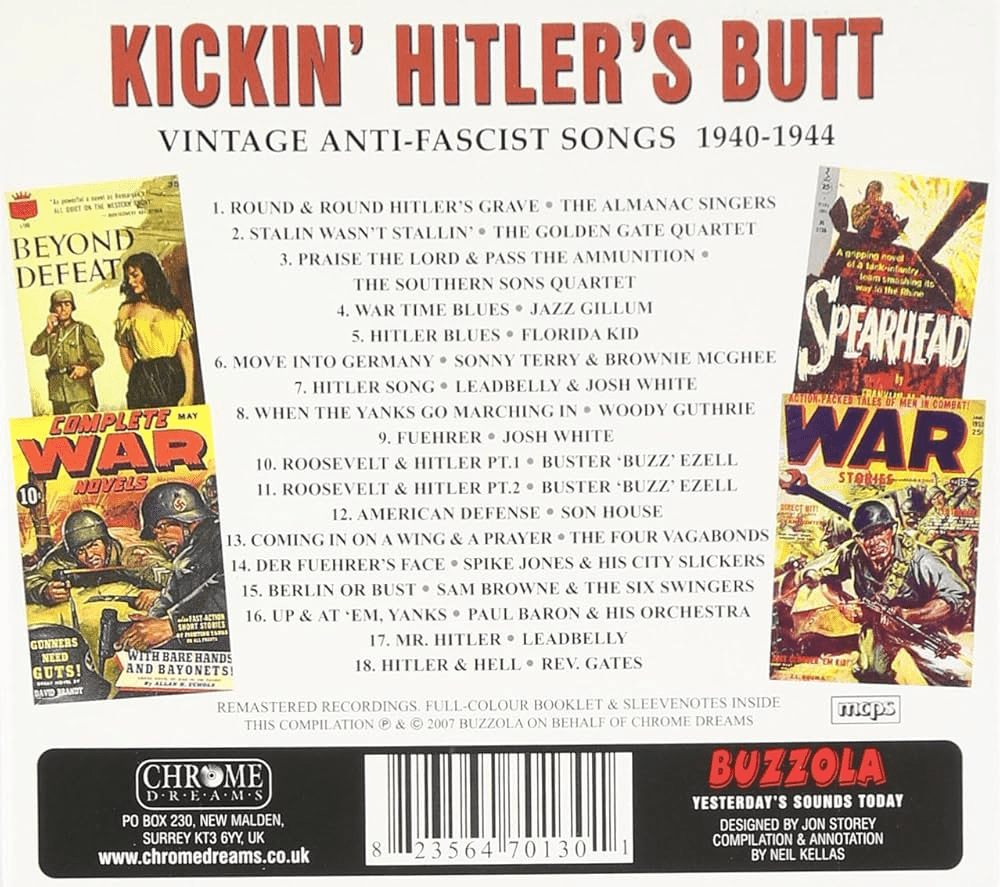
Today we’re discussing Tracks 10 & 11: ‘Roosevelt & Hitler Pts 1 & 2’ by Buster ‘Buzz’ Ezell, a folk/blues two-fer with a melody that Son House fans are likely to recognize.
There are a few mysteries to unpack in this episode, including 1) Who was Buster ‘Buzz’ Ezell and why was so little written about him?, and 2) Why was this song released in two parts? Read on to help us explore those questions and more.
If you’re joining us for the first time, welcome! While in one way each discussion will build on the last, ultimately I’ve organized the series in a way that allows each post to stand on its own. If you have yet to listen this excellent compilation, this link will take you to my recreation of it in the form of a YouTube playlist. If you happened to give my channel a follow while you’re there, I’d be much obliged : )
If you’d prefer to start at the beginning of this series, here’s a link to the Introduction.
The Artist
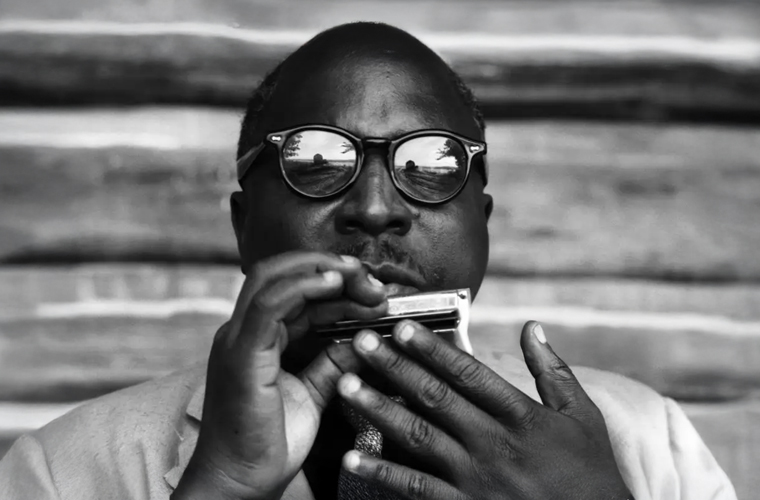
Unfortunately, there’s not much I can share about the life and work of Buster “Buzz” Ezell. He has no page on Wikipedia, and I’m not sure there’s enough available information online to justify the creation of one. Buzz’s Discogs profile lists him as a “blues singer, guitarist and harmonica player,” which doesn’t tell us anything we can’t hear for ourselves. Today’s songs aren’t strictly blues, so he likely had “folk/traditional” tunes in his repertoire as well. It appears he wrote ‘Roosevelt and Hitler,’ so we can add “songwriter” to his credentials. That profile also states that he was “probably” born in Prairie, Georgia and that he “was recorded by the Library of Congress in Fort Valley, Georgia, in 1941 and 1943.”
If he was in fact born in Georgia, and the only available recordings of his work were recorded in his home state, we might have an easy answer to the question of his relative anonymity. Unlike Josh White and Lead Belly, Buzz may have simply stuck closer to home, missing out on larger opportunities that might have been available in places like New York City or Washington DC.
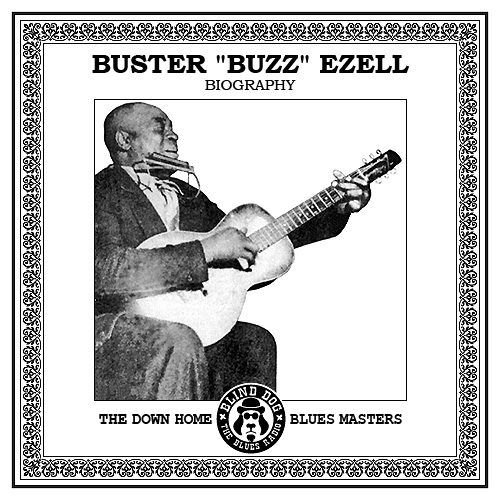
The videos below sample the album Salt Water Blues, which also features the title track and the blues standard ‘Boll Weevil.’ These four tracks currently comprise his entire YouTube catalog.
The Song
Roosevelt & Hitler Pts. 1 & 2 – Buster ‘Buzz’ Ezell
Genre/Style: Folk/Traditional/Blues
Year: 1941 and/or 1943
Players: Buster ‘Buzz’ Ezell
The Music
This is another solo performance, featuring one voice accompanied by acoustic guitar, which is about as simple as it gets. It’s possible the performance was recorded with a single microphone, which may explain the lackluster audio quality.
The song follows a Chorus-Verse-Chorus structure, featuring a total of eleven verses (seven in Pt. 1 and four in Pt. 2). Seven verses is a lot for any song, and Part 1 seems fairly complete in itself, so it’s hard to guess why a Part 2 was deemed necessary. It’s also hard to say if the two parts were recorded at the same recording session or were separated by a year or more.
The chords and melody seem to be repurposed from an existing traditional folk/blues tune. Son House’s terrific ‘Grinnin’ in Your Face,’ was the first to come to mind.
The Lyrics
Read the Full Lyrics on Genius
Title
The song could very well be called “Strange Things Are Happening in This Land,” since this is the line that’s repeated most throughout the song, including three times in each chorus.
The Chorus
The war is going on, causing many hearts to mourn / There’s strange things a-happening in this land
Chorus
The Chorus doesn’t change in either part/There are no changes to the chorus in either part.
The Verses
Verse 1: You may have read the Holy Bible where Matthew does record…
The singer references the Book of Matthew and likens the war to other biblical disasters like pestilence and earthquakes, which were seen as signs of impending apocalypse.
Verse 2: Nations against nations are rising in this land…
The singer watches as the conflict spreads, consuming the world. The final line, “For the time is drawing nigh,” adds to the apocalyptic vision.
Verse 3: We have read also of famines shall come in this land…
The singer complains of the high price of food (and the resulting empty stomachs) that have resulted from the conflict.
Verse 4: Roosevelt with Hitler, he tried to live in peace…
This verse speaks of Roosevelt’s initial reluctance to engage in the war, saying that the president preferred peace over fighting. But Hitler’s aggression ultimately made peaceful coexistence an impossibility.
“He’s treating us so mean / With his dreadful submarines” is one of my favorite couplets in the song.
Verse 5: Hitler, he is fighting…
This verse tells of Hitler’s dreams of conquest.
Verse 6: Some say Roosevelt was a coward…
This verse provides a reason (or excuse?) to those who criticized the president’s reluctance to commit to US involvement in the war. He was simply biding his time, at least until Pearl Harbor forced his hand.
Verse 7
Hitler tried to fool the Negroes by saying they ought not to fight / Said, “You have no home in the country, no flag and equal rights.” / But the n––ers they knewed the best / Their deeds did prove the test…
Verse 7
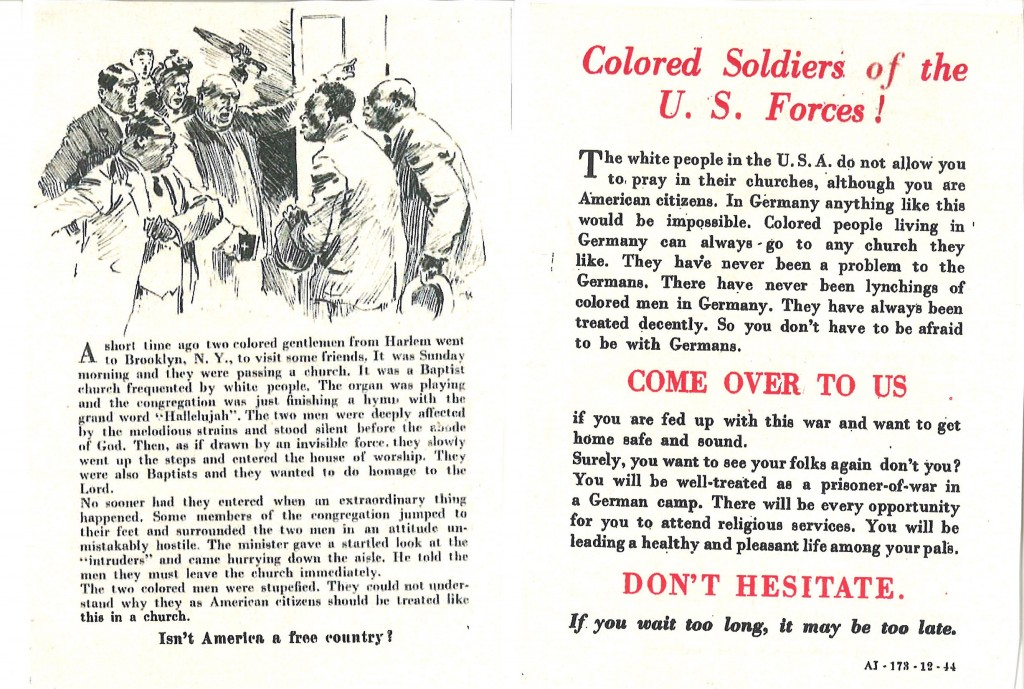
This verse stands out from the rest of the song, and the other songs on the album, as it draws attention to the problem of racism and the resulting mistreatment of Black Americans. The US military was still practicing segregation at the beginning of the war, and the “separate but equal” fallacy was as big a problem there as everywhere else. The PBS article “Race and the Army During World War II” reveals some ugly (but ultimately unsurprising) truths about the way Black soldiers were viewed at the time:
According to a report commissioned by the Army War College, African Americans were “careless, shiftless, irresponsible and secretive” and “unmoral and untruthful.” Commanding officers were instructed to “handle” their African American subordinates “with praise and by ridicule.” The accepted viewpoint of the day was that African American soldiers were not equally capable as — and would require more intensive leadership than — their white counterparts. Furthermore, the military believed black soldiers were unsuited to serve as officers.
This propaganda failed to dissuade over a million African Americans from joining between 1941 and 1945. Nor did it hamper the heroic efforts of The Tuskegee Airmen or Black soldiers who showed unprecedented bravery at Pearl Harbor and the Battle of the Bulge.
Part 2 of ‘Roosevelt and Hitler’ continues along the same lines both musically and lyrically, though in an abbreviated form. It seems to be more of an addendum, an afterthought, than a song in its own right.
Verse 1: When Uncle Same called to them, they answered…
A familiar character in songs both protest and patriotic, Uncle Sam makes an appearance. He speaks of “a soldier’s duty” and commends the bravery who answered his call to action, and as a result, died in the trenches.
Verse 2: Hitler called these Japanese, they could not help from crying…
On the phone with “these Japanese” (a somewhat curious phrase), Hitler seems to be warning his “allies” in the Empire of Japan not to “go up against that race.” I assume that race to be the race with which Hitler identifies: the white Aryan race. Relationships between world powers, especially fascist ones, are always fraught with conflict, even among members
Verse 3: Hitler told his wife at the supper table, he dreamt a mighty dream...
Somewhat unexpectedly, we find der Fuhrer and his wife at the dinner table speculating about submarines. The line “gain a many a friend,” is a rather light-hearted way to refer to Hitler’s designs on world domination.
Reflections
Unfortunately, I can’t say that this song stands out from the pack in any meaningful way. And Part 2 seems almost entirely superfluous. That said, I will keep an eye (and an ear) out for any additional information on today’s artist, to help fill in the picture, if nothing else. The most interesting thing that came of this post, by far, was the Nazi propaganda aimed at Black Americans. As much as I hate to say it, the message contains more truth than many would like to admit. Black Americans in the early 40s greatly suffered under the injustices committed by their white compatriots, both in and out of the military.
Links
Song Lyrics – Genius
Artist Page – Discogs
Artist Page – Blind Dog Radio
Disclaimer
~Content was created without the use of A.I.~
~Media content may be subject to copyright~
~Original content © Adam Astra 2026~