Tracks 7 & 17: ‘Hitler Song/Mr. Hitler’ by Lead Belly

“Kickin’ Hitler’s Butt: Vintage Anti-Fascist Songs 1940-1944” – An Annotated Playlist (Tracks 7 & 17)

Welcome Back!

If you’ve been following along, you’ll likely notice a few formatting changes in this post. This new streamlined approach will allow me to focus on the music, without getting bogged down in historical and biographical detail that is readily available elsewhere. It will also allow me to post more regularly over a greater range of topics. I’ll continue to share links that I found useful for folks wishing to dig deeper. If there’s anything essential you feel I’ve left out, let me know in the comments; I’m happy to consider your suggestions. Thanks for reading!

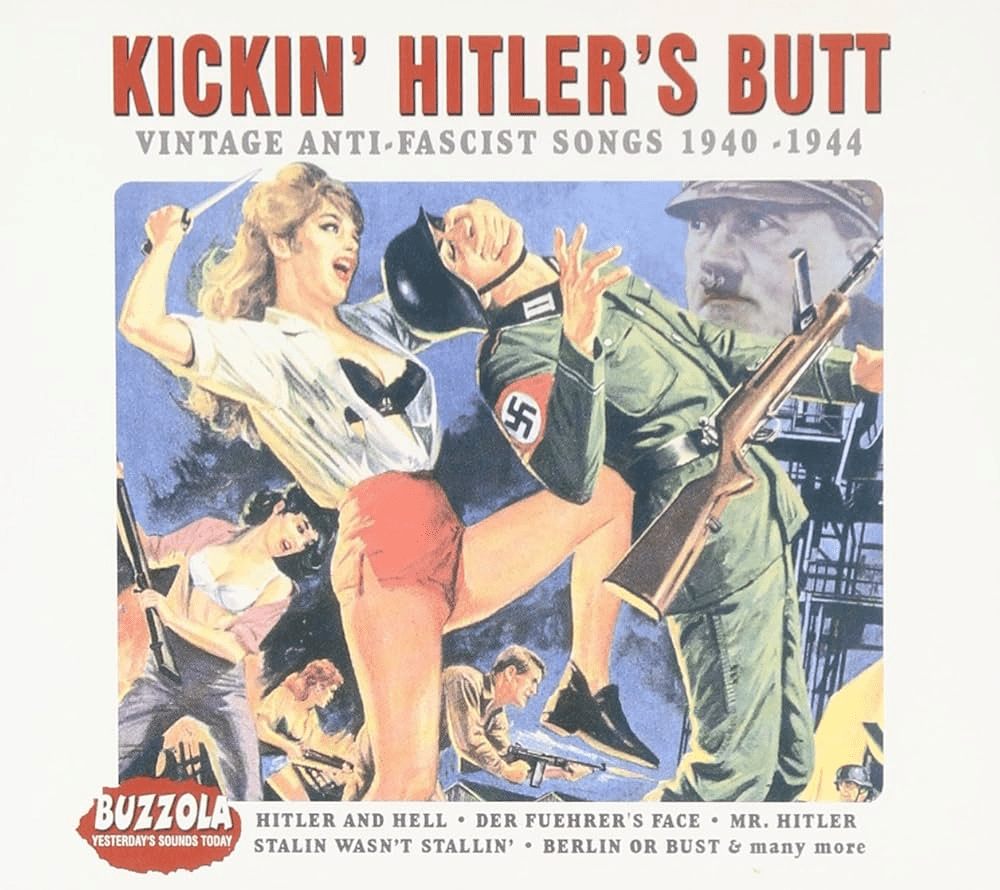
If you’re joining us for the first time, welcome! While in one way each discussion will build on the last, ultimately I’ve organized the series in a way that allows each post to stand on its own. If you have yet to listen this excellent compilation, this link will take you to my recreation of it in the form of a YouTube playlist. If you happened to give my channel a follow while you’re there, I’d be much obliged : )

If you’d prefer to start at the beginning of this series, here’s a link to the Introduction.


And Now…Today’s Track!


There’s a mystery at the heart of today’s tracks; one I’ve been puzzling over since I first attempted to recreate the Kickin’ Hitler’s Butt compilation on YouTube in the earliest stages of this project; one I’m hoping someone reading this can help me unravel. The question is this:

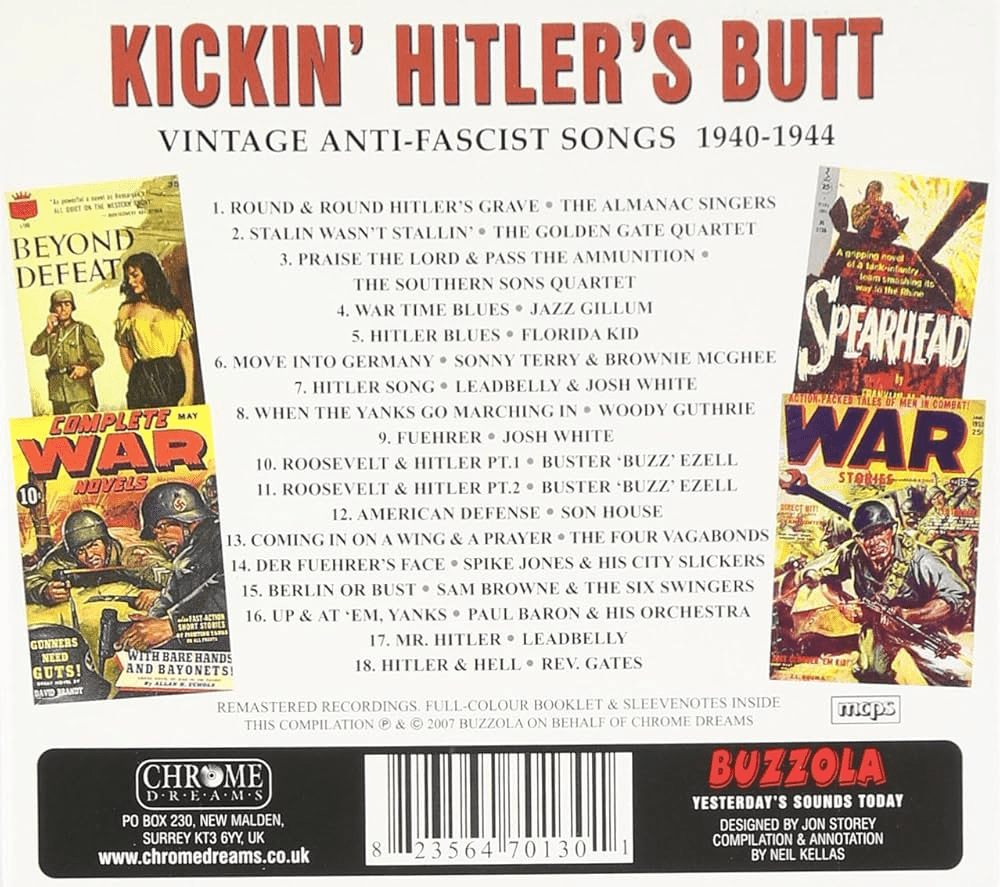
Are Track 7: ‘Hitler Song’ and Track 17: ‘Mr. Hitler’ actually the same song?

If yes, it would explain why so many sources refer to the song as both ‘Hitler Song’ and ‘Mr. Hitler;’ including Wikipedia, YouTube, and Smithsonian Folkways, who included the song in their excellent Lead Belly collection of 2015.

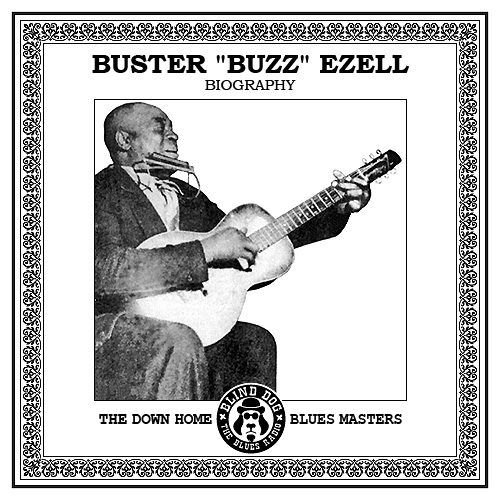
But if that’s true, why is the song featured twice in this compilation? If there are two versions, you’d think they’d need to be different enough to warrant the inclusion of both. And there are some clues pointing to some possible differences. Track 7 credits Josh White as a performer and, according to Apple Music, has a runtime of over 4 1/2 minutes. That adds one performer (White) and about ninety seconds to what we find for Track 17, which is credited solely to Lead Belly. So what we’d hope to find in Track 7 is an extended version of Track 17, with a clear contribution by Josh White on vocals and/or guitar.

What we find instead, or rather, don’t find…is any alternate version of Track 17 at all–at least not one we can listen to. Apple Music appears to offer a ninety-second sample of Track 7, which I was able to play, but to my ears it sounds identical to Track 17. I asked a friend who subscribes to the Apple Music to try the track, and he said it’s not actually available. I looked to Genius for help, which had an individual page for each track, but found the lyrics for “both” tracks were nearly identical.

Setting all that confusion aside–at least for now–we’re going to proceed under the assumption that these two songs are (more or less) the same song.


The Artist


Huddie Ledbetter aka Lead Belly (1888-1949)

Folk legend. Blues icon. King of the Twelve-String. Whatever you call him, Lead Belly was the living embodiment of the Great African-American Songbook, with a vast repertoire including “work songs, prison songs, ring chants, cowboy songs, games, and Tin Pan Alley to the Delta blues.” And most importantly, at least for the purposes of this blog, the First Great American Protest songwriter and singer.


The Song


Mr. Hitler (aka Hitler Song) – Lead Belly

Genre/Style: Blues/Folk
Year: 1942
Written & Performed by: Lead Belly

Here are a few things to consider while listening to ‘Hitler Song’:

  • Is the song more folk or blues? Does the distinction matter?
  • How does the music conform to or deviate from what you’d expect from a standard folk or blues song?

The Music


Is it Folk? Is it Blues? Why not both? The verses are quintessential 12-bar blues, but the chorus has a singalong quality that’s more commonly found in folk songs (like Track 1: Round and Round Hitler’s Grave, for example). This transition of styles comes with another change, as the mid-tempo verses rev up to something more toe-tapping for the chorus, and then back down again in a pattern that’s repeated throughout.

The most popular tab on Ultimate Guitar has the song in D Major, with a I-IV-V7 chord progression. This is a common progression in both folk and blues music, and is sometimes referred to as a “three-chord trick.”

Rhythm and harmony for the track are provided by Stella, Lead Belly’s signature 12-string acoustic guitar. The only thing more remarkable than his playing is his voice: always passionate, powerful, and tinged with a world-weary wisdom.


The Lyrics


Read the Full Lyrics on Genius

Intro

When Lead Belly says, “Do that again, I did not understand you that time. Take it easy.” in the spoken intro, who exactly is he giving instructions to? If Josh White were indeed playing guitar on the track, he would be a prime suspect. But as I’ve stated above, it’s unclear what role, if any, he played in the performance of this song. Perhaps he was unhappy with his own playing, and trying to get in tune with Stella, his guitar.

Chorus

We’re gonna tear Hitler down… / We’re gonna bring him to the ground… / Someday

Chorus

The chorus is repeated four times, occurring after every verse but the last. It repeats the opening line three times, ending with “someday.” It then repeats a new line three times, with the same ending. In addition to that repetition, the two sections are tied together lyrically by the rhyme “down/ground.”

Verses

The rest of the lyrics are just as straightforward. The first two verses say more or less the same thing: Hitler has wrongfully driven the Jews from their homes.

You ain’t no iron, you ain’t no solid rock / But we American people say, “Mr. Hitler, you is got to stop!”

Verse 3

Rather than focusing on what Hitler is, or has done, here Lead Belly states what Hitler is not: He is not strong like iron. He is not solid like a rock. If he is not those things, it follows that he’s likely the opposite of those things: weak and malleable. LB then speaks for the American people as a whole with an unequivocal, emphatic “stop!”


Reflections


For me, ‘Mr. Hitler’ isn’t among Lead Belly’s best protest songs (‘Bourgeois Blues’ has it beat by a mile), even though it is one of his best known. Even coming from a man of his talent, neither the music nor the words of the track strike me as particularly poignant or even memorable.

There’s much more to say about Lead Belly’s contribution to the Great American Protest Songbook, and I plan to dig into his life and work in more detail in a series of posts in the near future. So stay tuned for that!

Links

Song Lyrics – Genius
Song Page – Wikipedia
Artist Page – Wikipedia
Lead Belly – Smithsonian Center For Folklife & Cultural Heritage
Lead Belly – Cultural Equity


Come Back Next Time for Woody Guthrie’s ‘When the Yanks Go Marching In.’


Disclaimer

~Content was created without the use of A.I.~
~Media content may be subject to copyright~
~Original content © Adam Astra 2026~
Text reads: "This Music Kills Fascism"

Tracks 4 & 5: ‘War Time Blues’ by Jazz Gillum and ‘Hitler Blues’ by Florida Kid

“Kickin’ Hitler’s Butt: Vintage Anti-Fascist Songs 1940-1944” – An Annotated Playlist (Tracks 4 & 5)

Welcome Back!

While Tracks 2 & 3 focused on Southern gospel vocal groups, today’s tracks feature two fine examples of Chicago Blues. Wikipedia offers some insight into the history of this particular Blues style:

Chicago blues evolved from rural Delta blues following the Great Migration, or the Great Northern Drive, which was both forced and voluntary at times, of African Americans from the southern U.S. to the industrial cities of the north, such as Chicago. Big Bill Broonzy and Muddy Waters directly joined that migration, like many others, escaping the harsher southern Jim Crow laws and in search of better jobs and a more promising life in the North.

First up, We’ll be exploring Track 4: ‘War Time Blues’ by Jazz Gillum.

Next, we’ll discuss Track 5: ‘Hitler Blues’ by Florida Kid.


If you’re joining us for the first time, welcome! While in one way each discussion will build on the last, ultimately I’ve organized the series in a way that allows each post to stand on its own. If you have yet to listen this excellent compilation, this link will take you to my recreation of it in the form of a YouTube playlist. If you happened to give my channel a follow while you’re there, I’d be much obliged : )

If you’d prefer to start at the beginning of this series, here’s a link to the Introduction.


And Now…’War Time Blues’


The Release
This song, along with it’s B-side ‘One Letter Home,’ was recorded in Chicago on December 5, 1941 for Bluebird Records, a subsidiary of RCA Victor. The record was released about a month later.

The Players
Session players are listed as:
Jazz Gillum – Vocals, Harmonica
Horace Malcolm – Piano
Big Bill Broonzy – Guitar
Alfred Ekins or Al Collins – Bass

Promotional photo of Jazz Gillum for Bluebird Records

Jazz Gillum
Though singer and harmonica player William McKinley Gillum (1902-1966) hailed from Mississippi, he made his name in Chicago Blues scene, where he was known as “Jazz” Gillum.

He got his start in music playing on the streets of Charleston for tips, supporting himself with music and odd jobs after running away from home at the age of seven. He moved to Chicago in his early twenties, and the change in location came with a change in fortune, as his career began to take off after hooking up with singer, songwriter, and guitarist Big Bill Broonzy, who was older and already established in the Chicago music scene as a regular contributor at Bluebird Records. He first joined Broonzy on the stage, as part of a two-man act, and then later at Bluebird, where he became known for his role in many popular “Bluebird beat” recordings of the 30s and 40s.

Not long after recording ‘War Time Blues,’ he took a three-year hiatus from music, joining the US Army. His service ended with the war in 1945.

Notable Career highlights include:
– 1938: Recorded one of the earliest Blues songs to feature an electric guitar accompaniment, ‘Reefer Headed Woman,’ with jazz guitarist George Barnes.

1940: Recorded the Blues standard ‘Key to the Highway,’ giving the song its now-standard melody and arrangement as an eight-bar (rather than a twelve-bar) Blues.

1961: Recorded on albums with Memphis Slim and Arbee Stidham.

The Songwriter

Who wrote ‘War Time Blues’? Depends on who you ask!

The label for the Bluebird single credits Gillum for the song, and it would be simplest to leave it at that. However, Apple Music gives Sonny Boy Williamson I songwriting credit. He did put out a song, also on Bluebird (adding to the confusion) called ‘War Time Blues,’ recorded in May of 1940. But this version, despite having the same name, has no lyrics in common with Gillum’s. The lyrics do share many similarities with the Doctor Clayton song ’41 Blues,’ which was released in January of 1941, almost a full year before Gillum’s recording. It’s likely that Gillum’s track was adapted from both of those previous ones.


And now, let’s have a listen!


Track 4: War Time Blues – Jazz Gillum

Listen & Read

Listen to the song again while reading the lyrics.

The Song: Overview

Structure
12-Bar Blues
V1-V2-V3-V4-V5

Verse 1

War is raging in Europe / On water, land, and in the air / If Uncle Sammy don’t be careful / We’ll all be back over there

Verse 1

Uncle Sam (or “Sammy”) makes an appearance in Verses 1 & 5 as, of course, the US government personified, or more specifically as a mascot for the military. Rather than beating the war-drum in a demonstration of blind nationalism, the singer advises caution. It’s very possible he would rather like to avoid going to war at all (a fate that was unavoidable in the singer’s own life).

Samuel L. Jackson as Uncle Sam in Kendrick Lamar’s Super Bowl LIX Halftime Show in 2025.

Verse 2

The whole world is uneven / From the king to the heathen slave / ‘Cause ol’ Hitler and Mussolini is sendin’ millions to their lonely graves

Verse 2

Here the song touches on social issues beyond the threat of war, such as social inequality. It’s also notable that here we have the first mention of slavery on an album that features a large number of Black performers.

Verse 3 & 4

The songwriter shares the first of a series of ill-wishes for both Hitler and Mussolini. He’d rather see Hitler’s head chopped off and be done with it. The next best thing would be a rapidly-spreading (“galloping”) tuberculosis. And, for Mussolini, cardiac arrest with a side of insanity.

Verse 5

This war would soon be over, if Uncle Sam would use my plan / Let me sneak in Hitler’s bedroom with my razor in my hand

Verse 5

Like in Verse 1, the singer offers some strategic advice to the US military, offering to quite literally take matters into his own hands.


Let’s keep the record spinnin’ with the next track: Hitler Blues by the Florida Kid


The Florida Kid

In all the worldwide web, there’s sadly just not much information available on The Florida Kid.

A 2025 Facebook post by Mojohand.com, which describes itself as “The One Man Blues Boutique,” offers this brief bio:

“The Florida Kid” was the recording alias of a little-known blues singer and pianist named Ernest Blunt…remembered primarily for a striking and topical song called “Hitler Blues,” recorded in 1940 in Chicago.

Beyond that single release, very little is known about Ernest Blunt. No substantial biographical details or additional recordings have surfaced under his name or alias. He stands as a mysterious figure in blues history—one of many regional musicians who briefly entered the studio, captured a moment in time, and then disappeared from the public record. “The Florida Kid” remains a fascinating footnote in the story of American blues.”

The Release

Recorded in 1940, this is the earliest track we’ve encountered so far.

Track 5: Hitler Blues – The Florida Kid

Genre/Style: Blues, Chicago Blues
Year: 1940
Players: The Florida Kid

Listen & Read

Listen to the song again while reading the lyrics.

The Song: Overview

Structure
Six Verses w/ a Chorus

The Lyrics

This song takes a personal, rather than historical or political approach, with Hitler acting almost like a bogeyman looming in the shadows, waiting to strike when you least expect it.

Well, baby, have you heard about Hitler? / Honey do you care? / May be on the way to our country / May heavy-hit us here

Verse 1

The singer is a man addressing a woman. He starts out sweetly, calling her endearing names like “baby” and “honey.”

Because old Hitler, he’s a bad man / Trying to take every country he know / Well, before he take this country, woman / Please be my so-and-so

Chorus

He also uses the impending threat of war as a way to try to get laid. This made me chuckle, bringing to mind the “You don’t want to die a virgin, do you?” line from the movie Independence Day (1996).

Still, there’s something kind of cute about his plea for the woman to “Please be my so-and-so.” He gets a little more forceful in Verse 2, repeatedly demanding to be brought “plenty lovin’,” which is admittedly less cute.

Well, Hitler say he was a man / From his feet to his chest / He don’t bar nobody but / God and Death

Verse 3

There’s almost a sense of admiration for Hitler’s toughness in Verse 3. The phrase “don’t bar nobody” I take to mean something like he doesn’t concern himself with the opinions of, or take any shit from, any living human being.

Hitler got his just-right tanks / His planes and ships / He get over your town / He’ll let his big bomb slip

Verse 4

The final line of Verse 4 hints at a possible euphemism in the same vein as Outkast’s ‘Bombs Over Baghdad.’

Hitler says some of our peoples are white / Says some are brown and black / But Hitler say all Americans to him / Look just alike

Verse 5

While the previous track is the first to mention slavery, this is the first mention of race in the album. There’s obviously a lot to be said on both topics, but I’ll leave those large reflections for a later date.

Well, you better mind how you get drunk / Be careful how you clown / You may wake up one of these mornings / And Hitler be wreckin’ your town

Verse 6

The song ends with some closing words of caution. I appreciate that his message is not to stop getting drunk and clowning—The Kid is no buzzkill. He just asks his countrymen to be a little more mindful in how they go about their intoxicated buffoonery.


Links for ‘War Time Blues’

Song Lyrics – Genius
Artist Page – Wikipedia
Artist Page – Web

Links for ‘Hitler Blues’

Song Lyrics – Genius


Come Back Next Time for Tracks 6 & 8!


Disclaimer

~Content was created without the use of A.I.~
~Media content may be subject to copyright~
~Original content © Adam Astra 2026~
Text reads: "This Music Kills Fascism"

Track 2: ‘Stalin Wasn’t Stallin” by The Golden Gate Quartet

“Kickin’ Hitler’s Butt: Vintage Anti-Fascist Songs 1940-1944” – An Annotated Playlist (Track 2)

Welcome Back!

Today we’re discussing Track 2: ‘Stalin Wasn’t Stallin” by The Golden Gate Quartet. This is the first of three Black male A capella group performances featured on this album, and it will be interesting to compare their contributions as we progress through the series.

As you can tell by the punny title, today’s song approaches its subject—the role of Russia and its leader, Joseph Stalin, in helping the Allies to beat back Hitler’s advancing army—with more than a little bit of humor.

You’ll notice right away that the performance style is very much of its time. And while the quality of the recording is admittedly less than stellar, that doesn’t have to keep us from enjoying the song for what it is, and what it can tell us about the history of recorded music in America.

If you’re joining us for the first time, welcome! While in one way each discussion will build on the last, ultimately I’ve organized the series in a way that allows each post to stand on its own. If you have yet to listen this delightful compilation, this link will take you to my recreation of it in the form of a YouTube playlist. If you happened to give my channel a follow while you’re there, I’d be much obliged : )

If you’d prefer to start at the beginning of this series, here’s a link to the Introduction.


Before we get into the music, let’s learn a little about the people involved.


The Golden Gate Quartet
According to one source, it all started in a barbershop—a fitting beginning for any quartet—in Norfolk, Virginia. It was there, in 1934, that a one-legged bass vocalist by the name of Robert “Peg” Ford and tenor singer A.C. “Eddie” Griffin (the owner of said barbershop) decided to create an all-male four-piece A capella group that would specialize in the style of gospel singing known as “jubilee.”

Unlike, say, the older Alabama gospel tradition, with its trademark reliance on formal song structure and straight-ahead harmonies, Virginia’s gospel music was looser, and more rhythmic. Influenced by such varying sources as the pop group Mills Brothers, the swinging jazz of the Three Keys, and the emotional wailing of area pulpit preachers, jubilee singing was something daring and exciting – gospel music geared for the body as well as the soul. – interjazz.com

Knowing their group needed a spark of youthful energy, they visited the local high school, Booker T. Washington, and recruited two young singers from the glee club: second tenor Henry Owens and baritone Willie (sometimes spelled Willy) Johnson.

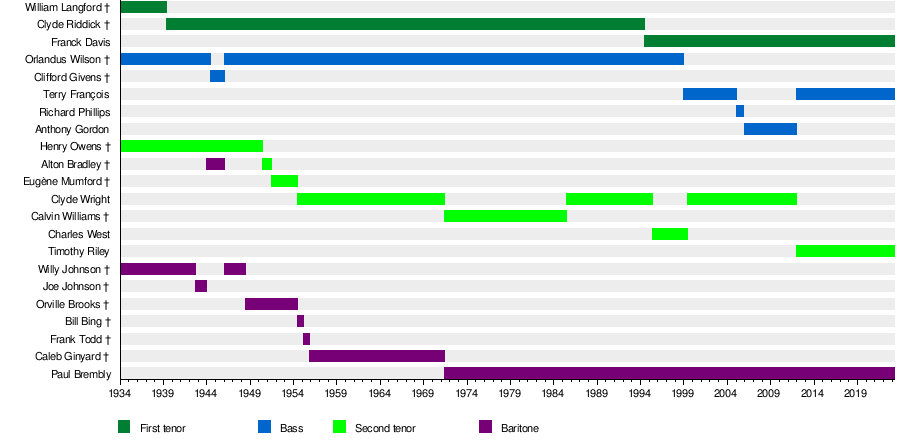
A short time later, Peg and Eddie were replaced by two more students: William Langford (first tenor) and Orlandus Wilson (bass). It was these four young Black singers who began performing, first in churches and later on local radio, as The Golden Gate Jubilee Quartet.

And they had quite a bit of success. In 1938 alone, they performed in John Hammond’s historic From Spirituals to Swing concert at Carnegie Hall, and released two of their most popular records: the spiritual ‘John the Revelator,’ which would later be inducted into the National Recording Registry, and ‘Golden Gate Gospel Train,’ which would earn them national radio airplay and become a signature song for the group.

Two years later, they signed a new contract with Okeh, a subsidiary of Columbia Records, and officially changed their name to The Golden Gate Quartet. It’s around this time that Willian Langford left the group and was replaced by Clyde Riddick. This would usher in a new era of departures and replacements for the group.

The Quartet made history again in 1941, as the first Black musical group to sing at Constitution Hall, after being invited to perform at the inauguration of Franklin D. Roosevelt.

Ninety (yes, NINETY) years later, the group remains active. Its longest-standing member, Orlandus Wilson, was active in the group for sixty-three years, from 1934 to 1998. He joined at the tender age of 16, though he did miss one year, 1944…but you can’t blame a guy for getting drafted. In addition to being a talented bass vocalist, Wilson was active in arranging and composing for the group. Of the four founding members, only Wilson has his own Wikipedia page.

If you’re interested in knowing more about the group’s many members, here’s a timeline from Wikipedia

Keeping this brief bio in mind, let’s listen to today’s track!


Track 2: Stalin Wasn’t Stallin’ – Golden Gate Quartet

Genre/Style: Vocal (Male), A capella
Song by: Willie Johnson
Year: 1943
Singers: Willie Johnson, Henry Owens, Orlandus Wilson, Clyde Riddick


Stalin wasn’t stallin’ / When he told the beast of Berlin / That they’d never rest contented / Till they had driven him from the land

Chorus

Listen & Read

Listen to the track again, this time while reading over the lyrics.

The Song

The Songwriter
Willie Johnson, it turns out, is a common name among musicians of the time. Early Blues enthusiasts will have heard of the gospel Blues singer and guitarist, ‘Blind’ Willie Johnson. Electric Blues fans may know the guitarist Willie Johnson, famous for his work with Blues legend Howlin’ Wolf. I had to do some digging, but finally found the Willie Johnson I was looking for: Bill ‘Willie’ Johnson, songwriter, baritone, and original member of the Golden Gate Quartet. Unfortunately, there’s no Wikipedia page for Willie, and further information is hard to come by.

Structure
C1-V1-V2-V3-C2-V4-V5-C3-V6-C4

The Title
A pun in a title sets a tone—it says, “we’re having fun with it” at its best, and “aren’t we clever?” at its worst. There is definitely a fine line between the two. With a title like ‘Stalin Wasn’t Stallin’,’ I think we’ve got to take the humor that the wordplay suggests as intentional. Whether or not the humor is successful is mostly up to the listener.

The Chorus
Since the chorus, which begins the song, is repeated four times, with little to no variation, we’ll touch on it here before moving on to the verses. We’ll make a quick note of the music, but the thing that really stands out here is that wordplay.

Stalin wasn’t stallin’
When he told the beast of Berlin
That they’d never rest contented
Till they had driven him from the land
So he called the Yanks and English
And proceeded to extinguish
The Führer and his vermin
This is how it all began

Full Chorus

Music
The Chorus is sung in four-part harmony with a punchy, staccato delivery that’s more jazz than gospel.

Wordplay
Once again, the lyrics draw some attention to themselves through wordplay. The chorus alone features rhyme (Berlin/vermin, English/extinguish, land/began), including one homonym (Stalin/Stallin’); alliteration (beast of Berlin); and assonance (proceeded/extinguish). The phrase “beast of Berlin” seems to be a play on the idiom “beast of burden.” Though I don’t think it qualifies as a pun, it’s still a clever trick of misdirection.

The Verses
The six verses are delivered by baritone songwriter Willie Johnson in a spoken-word style resembling a sermon, which fits especially well given the group’s gospel background.

Each verse features an xAxAxBxB rhyme scheme.

Verses 1-3

Now, the Devil, he was reading / In the Good Book, one day / How the Lord created Adam / To walk the righteous way…

Verse 1, Lines 1-4

The first three Verses are sung back-to-back, so we’ll discuss them both now.

Here, some familiar characters are introduced. First, we have the Devil, and he’s doing something unexpected: reading the Bible (presumably for the first time). More specifically, he’s reading the Book of Genesis, and taking particular issue with the story of the Lord’s creation of Adam—a man divinely designed “to walk the righteous way.” Fueled by jealousy, he sets out to create not an anti-Christ, but an anti-Adam.

While Adam is formed out of dust, Hitler (the Devil’s Evil Adam) is laid rather like an egg: “Then he mixed his lies and hatred / With fire and brimstone / Then the Devil sat upon it / That’s how Adolf was born.”

So he packed two suitcases / Full of grief and misery / And he caught the Midnight Special / Going down in Germany…

Verse 2, Lines 1-4

I appreciate the shoutout to the blues standard ‘Midnight Special,’ first recorded in 1926 as “Pistol Pete’s Midnight Special” by Dave “Pistol Pete” Cutrell.

Now Adolf got the notion / That he was the master race / And he swore he’d bring New Order / And put mankind in its place…

Verse 3, Lines 1-4

The New Order embodied the Nazi vision of a pan-German racial state structured to benefit an alleged Aryan-Nordic master race. It outlined the German colonization of Central and Eastern Europe, alongside the Holocaust against Jews and wider destruction of Romani people and others deemed “unworthy of life”. The plan also entailed the extermination, expulsion, or enslavement of most Slavic peoples and others classified as Untermenschen (subhumans). Nazi Germany’s aggressive pursuit of this territorial expansion (Lebensraum) was a primary cause of World War II. – Wikipedia

Then that bear smacked the Führer / With a mighty armored paw / And Adolf broke all records / Running backwards to Kraków…

Verse 5, Lines 1-4

The Russian Bear is a widespread symbol (generally of a Eurasian brown bear) for Russia, used in cartoons, articles, and dramatic plays since as early as the 16th century, and relating alike to the Russian Empire, the Russian Provisional Government and Russian Republic, the Soviet Union, and the present-day Russian Federation.

The uses of the bear are mixed. It was often used by Westerners, in British caricatures and later also used in the United States, often not in a positive context. On occasion it was used to imply that Russia is “big, brutal and clumsy”. However, Russians have also used it to represent their country, where it has been used as a “symbol of national pride. – Wikipedia

Then this bear called on his buddy / The noble fightin’ Yank / And they sent the Führer running / With their ships and planes and tanks…

Verse 6, Lines 1-4

After the Japanese bombing of Pearl Harbor in December, 1941, the United States declared war on Japan. Germany and Italy declared war on the U.S. a few days later, and the nation became fully engaged in the Second World War.

U.S. involvement in the Second World War was quickly followed by a massive mobilization effort. With millions of men and women serving overseas in the nation’s armed forces, most of those who remained at home dedicated themselves to supporting the war effort in whatever means was available to them. Women, who had worked as homemakers or had held jobs outside military-related industries, took jobs in aircraft manufacturing plants, munitions plants, military uniform production factories, and so on. – Library of Congress

Many see Hitler’s attack on (and eventual retreat from) Russia to be the major turning point in the war. As a major cause for celebration for the Allies, the event is mentioned in the majority of the tracks on this album, most of which were written shortly after this retreat in June of 1941.

Final Lines

Now the Führer’s having nightmares / ‘Cause the Führer knows darn well / That the Devil’s done wrote “Welcome” / On hs residence in Hell

Verse 6, Final Lines

Reflections

But Wait…I Thought Stalin was a Bad Guy

It’s ok (and often necessary) to acknowledge when a song hasn’t aged well. Today, Joseph Stalin is viewed as a tyrant whose regime was guilty of innumerable crimes against humanity, including mass deportation, starvation, and genocide. So it’s a bit of a shock to hear a song that appears to praise both Stalin and Russian might. But one must remember, this was a time before the Cold War’s threat of Russian nukes, and that at the beginning of WWII, many—including Winston Churchill and President Roosevelt—believed Stalin’s Russia was a necessary ally in defeating Hitler. As the war ended, Stalin’s popularity quickly began to wane, and his reputation would take a severe blow with the publication of George Orwell’s Animal Farm (1945).

It wasn’t until the dissolution of the Soviet Union in 1991, when many archival materials became declassified, that historians began to get a clear picture of the number of people killed by Stalin’s regime: a number in excess of three million.

For more on Stalin, check out this BBC article, “Joseph Stalin: National hero or cold-blooded murderer?”

Links

Song Lyrics – Genius
Song Page – Wikipedia
Golden Gate Quartet – Wikipedia
Jubilee Quartet – Wikipedia
The Golden Gate Quartet – Inter-Jazz


Come Back Next Time for Track 3: “Praise the Lord & Pass the Ammunition”


Disclaimer

~Content was created without the use of A.I.~
~Media content may be subject to copyright~
~Original content © Adam Astra 2026~
Text reads: "This Music Kills Fascism"

Track 1: ‘Round & Round Hitler’s Grave’ by The Almanac Singers

“Kickin’ Hitler’s Butt: Vintage Anti-Fascist Songs 1940-1944” – An Annotated Playlist

Welcome!

Welcome to the first of ten posts exploring this terrific collection of protest songs. Today we’ll be discussing the first track on the album, ‘Round & Round Hitler’s Grave,’ by The Almanac Singers—an anti-fascist ditty you can do-si-do to!

The Almanacs do more than dance on Hitler’s grave…they hoot, holler, whistle, and wail around it, all while picking, strumming, and singing about the many ways they’d like to bring about his untimely demise. This is a proper high-spirited hootenanny, with a real sense of joy in the performances, proving you can fight fascism and have fun at the same time.

Pete Seeger (voice, banjo) takes the lead in each of the six short verses, with the Almanacs jumping in with a lively chorus after each, and Sis Cunningham bridges the gaps with a playful accordion part.

If you missed the Introduction to this series and you want to know more about the album, you can find it here.


Before we dig any deeper, let’s give the song a spin!


Track 1: Round & Round Hitler’s Grave – The Almanac Singers

Genre/Style: Folk, Country
Year: 1941/1942
Song by: Pete Seeger, Woodie Guthrie, Millard Lampell
Players (shown below, from left to right): Woody Guthrie (guitar), Millard Lampell, Bess Hawes (guitar), Pete Seeger (banjo), Arthur Stern, Sis Cunningham (accordion)

The Almanac Singers

“In 1940…the group climbed into a midnight blue Buick and blazed a trail across the United States, spreading the gospel of unionism and bringing folk music back to the people. Creating a new kind of topical music, The Almanac Singers used old folk melodies to tell the stories of the time while planting seeds wherever they went. They played at parties, rallies, benefits, unions meetings, and informal “hootenannies”, a term Pete and Woody learned on an Almanac tour of Portland and Washington.” – Bob Wolpert (2025).

The folk Protest supergroup known as The Almanac Singers (founded by Pete Seeger, Lee Hays, and Millard Lampell) grew out of the fabled New York City folk scene of the early forties. Today, the group is best known for their 1941 recording of the trade union song, ‘Which Side Are You On?,’ written in 1931 by American activist Florence Reece.

The Almanac Singers, Pete Seeger, and Woody Guthrie will all get their share of the spotlight in future posts (Guthrie sooner than the others, as he makes another appearance on this album), so I’ll save the biographies for another time. We’re here first and foremost to dance ’round Hitler’s grave, after all.


A Little Background on the Song

“We got to sing [the pro-war song, ‘Round and Round Hitler’s Grave’] on January ’42, on a nationwide CBS broadcast, ‘This is War’. But the next day a headline in a major New York newspaper said ‘Commie Singers try to Infiltrate Radio,’ and that was the last job we got” – Pete Seeger

No Wikipedia page for the song exists; the only direct mention of it on the site seems to be from the above Pete Seeger quote from his book Where Have all the Flowers Gone?, which shares a title with one of his best-known songs.

This song is not among the group’s most popular, which is one of the reasons I dig this compilation. In fact, the recording doesn’t appear on an album until 2001, when it appeared on the Songs of Protest compilation (Prism).


The Song: Overview

Verse 1

Now I wished I had a bushel / Wished I had a peck / Wished I had old Hitler / With a rope around his neck

Verse 1

They’re literally going for the neck in this first verse. The bushel and peck lines are about as stereotypically ‘folksy’ as you can get, and seem transplanted from another song, but they set up the rhyme with neck nicely.

You’ll notice right away how quickly these verses fly by. This song is really about the Chorus.

Chorus

Hey! ‘Round, ’round Hitler’s grave / ‘Round, ’round we go / Gonna lay that poor boy down / He won’t get up no more

Chorus

I suppose songs have been going ’round and ’round ever since people started singing and dancing. Doing so around someone’s grave brings to mind the idiom to dance on someone’s grave, which has been in use since at least the 1800s.

It’s generous to call Hitler a ‘poor boy,’ I take that expression as another bushel-and-peck style folkism.

The final line completes the slant rhyme (go/more) and is satisfying in its finality.

Sometimes I like to try to tune in on each singer’s individual voice as they sing in unison, and say to myself, “There’s Woody!” or “That must be Bess!”

Verse 2

Mussolini won’t last long / Tell you the reason why / We’re gonna salt his beef / And hang it up to dry.

Verse 2

Hitler’s not the only one in the line of fire here. The Almanacs also threaten to make beef jerky out of Mussolini. Or perhaps, since he’s Italian, he’d make a better bresaola: a type of aged air-dried salted beef known for its reddish-purple color.

Verse 3

The German army general staff / I guess they missed connection / Went a hundred miles a day / But in the wrong direction

Verse 3

I don’t believe this line is referring to a literal historical event (please let me know if I’m wrong). I think they’re merely poking fun at the German army and its inept leadership. Particularly, their ill-fated decision to prematurely invade Russia.

Verse 4

I’m goin’ to Berlin / To Mister Hitler’s town / I’m gonna take my forty-four / And blow his playhouse down

Verse 4

Look out! Pete’s got a gun! If you’re picturing the jovial folksinger brandishing a .44 Magnum, I’ve got some bad news: Dirty Harry’s infamous weapon of choice wouldn’t be in production for another fifteen years.

I have the impression that the phrase “blow (the) playhouse down” has some history in song, and I did a little digging, but without much to show for my effort. There’s a song called ‘I’m Gonna Tear Your Playhouse Down,’ written by Earl Randall and recorded by Ann Peebles (of ‘I Can’t Stand the Rain’ fame), but that came much later in 1972. Gillian Welch’s ‘Tear My Stillhouse Down’ came even later, in 1996. Perhaps “playhouse” is a clever nod to the expression “theater of war,” or perhaps I’m overthinking all of this.

Verse 5

How Hitler went to Russia / In search of Russian oil / But the only oil he’ll find there / Is a pot in which he’ll boil

Verse 5

Was Hitler really after oil in Russia? This quote from Atlantic Magazine sheds some light on the issue:

“Opinions may differ on the question of whether or not oil was the decisive motive for Hitler’s attack on Russia. But after ten months of the Russian campaign there can be no doubt of Hitler’s imperative need of the Caucasian oil fields…To achieve his purpose Hitler must have new oil supplies; and he must deprive the Soviet Union of hers.” – Frederick Phillip Hellin (June 1942 Issue) 

The concept of an ‘oil war’ is certainly not a new one. I shouldn’t have been surprised to discover that the term even has its own Wikipedia page. As a child of the early 80s, I’ve followed the frontline news reports of one oil war after another with fascinated horror: The Iran-Iraq War (1980-1988), The Gulf War (1990-1991), The Iraq War (2003-2011), and here we are again in 2026, as if it will never stop, as if we’ll never learn.

Verse 6

Now Mister Hitler’s traveling mighty fast / But he’s on a one-way track / Started down that Moscow road / But now he’s coming back

Verse 6

Hitler tucks tail and runs in the sixth verse. Though it is the last, there’s nothing particularly final about the lines here. The feeling is more that this song could go on with any number of verses, ’round and ’round for as long as the players can keep it up, or even better, until all the fascists that plague humanity are tucked safely into their final burying ground.


Reflections

This is a protest song with a vibe miles away from Dylan’s iconic ‘Masters of War,’ with its cutting line, “I’ll stand over your grave until I’m sure that you’re dead.” And that’s part of what I like about it. Is this song among my favorites of this album? Yes. It is also among my favorites by this group, let’s say, somewhere in the Top 5. And it’s one I don’t mind getting stuck in my head.

As a performer, I probably wouldn’t cover it as-is, but I would like to try out the banjo part the next time I get my hands on one. I think you could have some fun rewriting the lyrics by either substituting in updated figures and events (a few should come immediately to mind), or generalizing in a way that says, more or less: Fuck ALL the fascists:

“Hey! ‘Round and ’round the fascist’s graves / ‘Round and ’round we go / Gonna lay the bastards down / Won’t get up no more”


Links

Song Lyrics – Genius
Song Lyrics – Woodyguthrie.org
The Almanac Singers – Wikipedia
Who Are the Members of The Almanac Singers – Facebook
Songs of Protest Album Page – Discogs
Oil War – Wikipedia


Come Back Next Week for Track 2: ‘Stalin Wasn’t Stallin”


Disclaimer

~Content was created without the use of A.I.~
~Media content may be subject to copyright~
~Original content © Adam Astra 2026~
Text reads: "This Music Kills Fascism"